Project Brief:
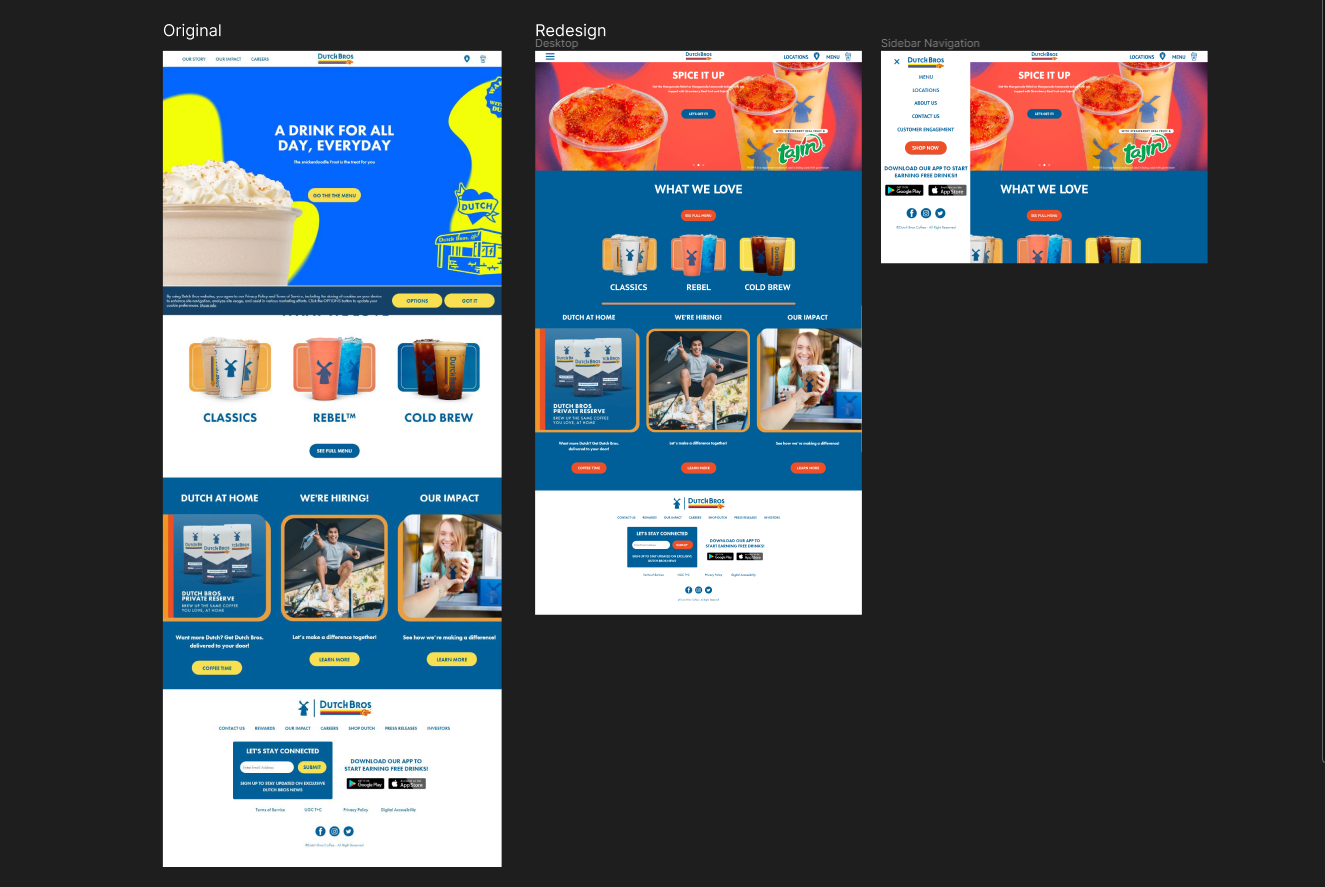
-Identified and addressed usability issues on the Dutch Brothers' website to enhance the overall user experience.
-Aligned the project strategy with a focus on improving website usability, reflecting the primary goal and guiding decisions throughout the design process.
Team and Role:
-Collaborated with a team of designers to conduct individual tests, followed by collective analysis to derive insights.
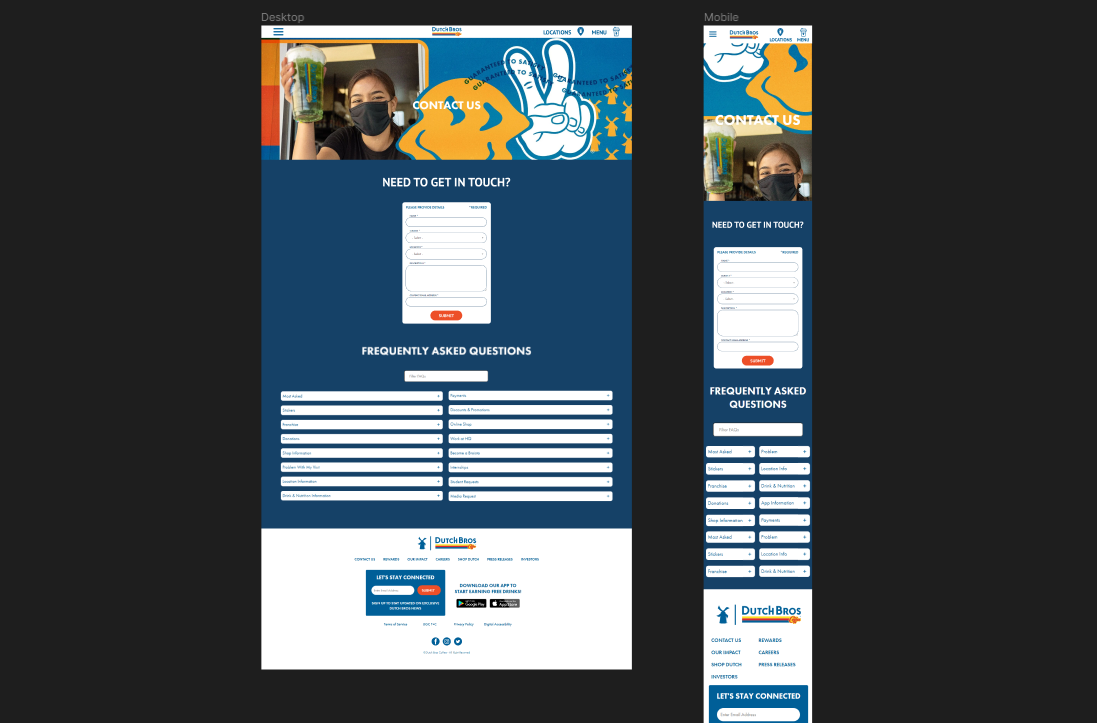
-Each team member developed individual redesigns based on collaborative data and findings, ensuring a cohesive approach to addressing usability issues.
Customers and Needs:
-Targeted audience included Dutch Brothers' executives and stakeholders aiming to enhance website usability.
-Addressed customer needs by focusing on improving website usability to boost customer satisfaction, loyalty, and engagement with Dutch Brothers' products.
Approach to Problem Space:
-Employed research-driven methodologies, including demographics/psychographics surveys, heuristic evaluations, card sorts, and usability tests, to gather essential user insights.
-Made informed design decisions based on collected data, including adjusting the primary action button's placement to enhance user interaction and experience.
Iteration Based on Feedback:
-Adjusted design decisions based on feedback from teammates and insights derived from user tests, leading to more effective and user-friendly solutions.
-Modified the primary action button's location and design elements based on user testing feedback, ensuring better visibility and functionality.
Surprising Insights and Constraints:
-Realized discrepancies between initial assumptions and actual customer demographics and psychographics, necessitating a shift in focus and strategy.
-Faced constraints related to project scope and timeframe, limiting extensive research and iterative design processes, requiring prioritization and efficiency.
Reflection and Learning:
-Acknowledge the need for more extensive research and iterative design processes to refine and optimize solutions effectively.
-Recognize the importance of creating multiple design iterations to balance aesthetics and functionality, ensuring alignment with user needs and preferences.